
 For entertainment venues
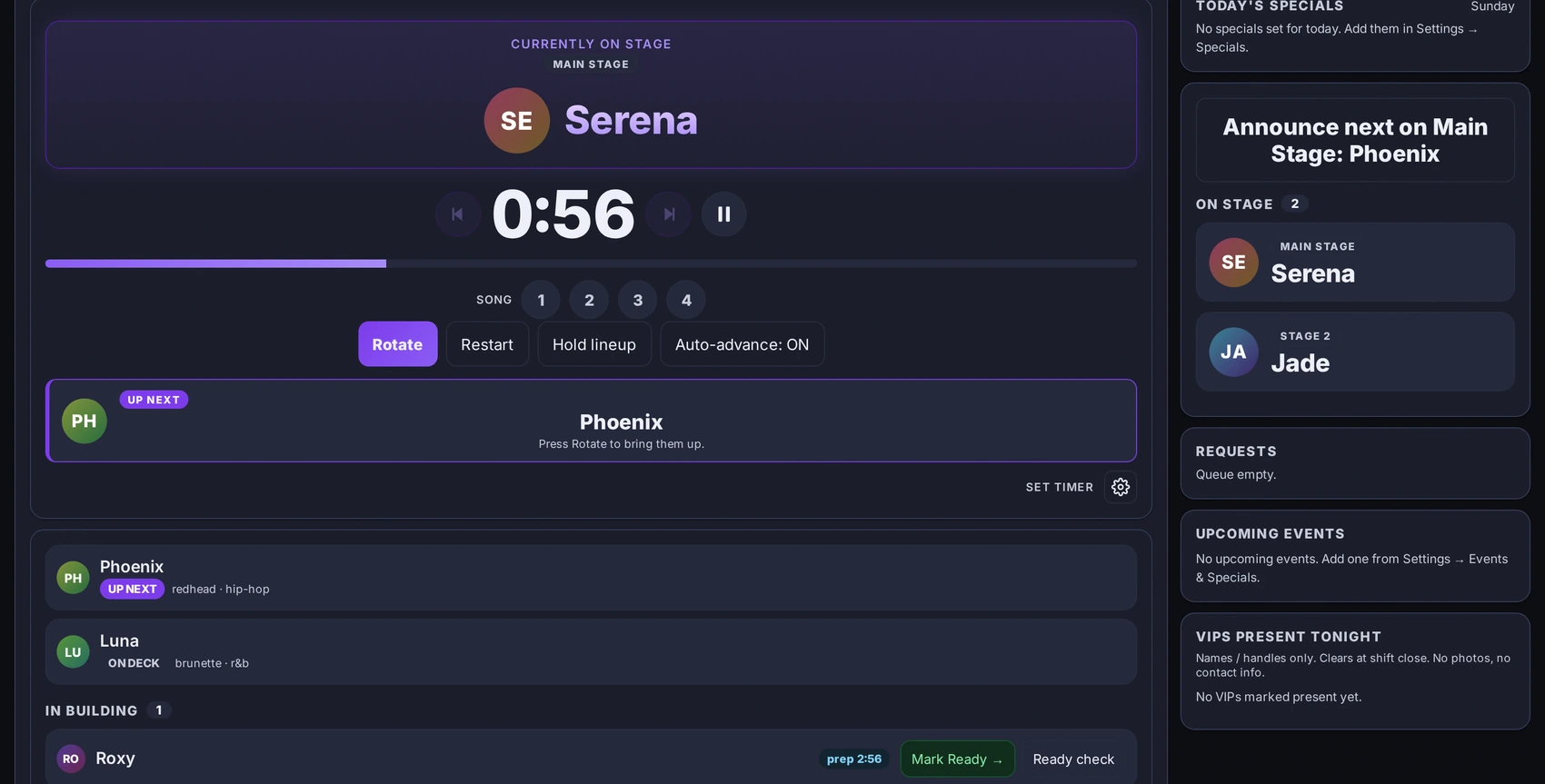
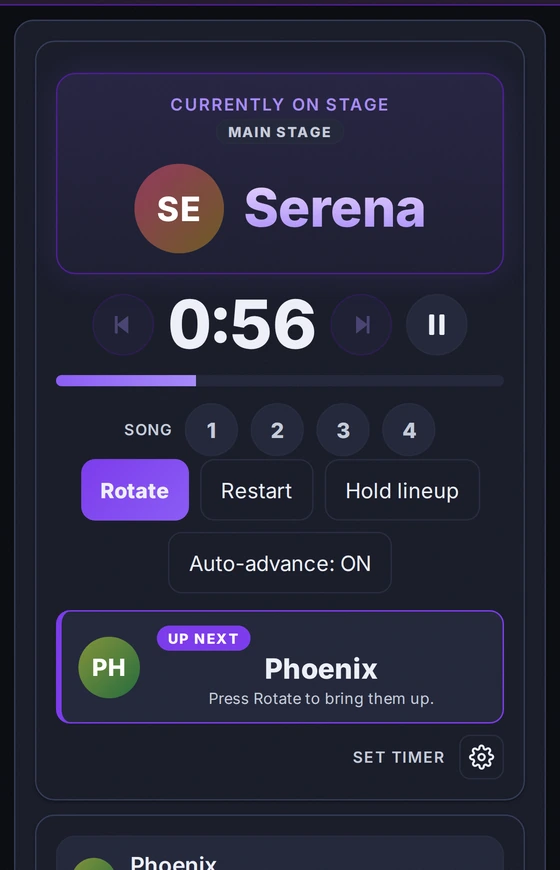
One live rotation board every DJ, entertainer, and manager sees update in real time, on any phone in the building. It replaces the paper list, the whiteboard, and the radio, and it keeps every shift on the record.
Joining a venue as a DJ or entertainer? Use the invite link your manager sent.
Discreet by design. Operational data like rotation order, statuses, and request entries clears at shift close. Attendance records auto-delete after 30 days. Nothing sits around waiting to leak.
Joining a venue? Ask your manager for the invite link they sent. One tap and you're on the team. There's nothing to sign up for here.
The empty stage is the first thing a guest sees. MyStageZone makes sure there isn't one, and makes the whole floor provable, so problems surface themselves instead of rolling uphill after it's too late.
The owner sets one destination, an email or a secure endpoint, and each night's shift report lands there automatically. Verified before it activates, logged every time. Managers and DJs can't see it or point it somewhere else.
Every skip needs a reason and is stamped with who did it, and managers are always notified. A pulled skip logs honestly too, so the night's report tells the truth, not a story.
Taking someone off the rotation records who approved it and when. The people on the floor hold each other accountable, because the record does, not a manager's memory at 2 a.m.
MyStageZone proves the floor. It never touches the money. No tips, no payments, no dollar amounts on anyone. That's not a gap; it's the point.
You pay once for your venue. Every DJ, entertainer, and manager on your team is covered, free, forever. No per-seat fees. No per-DJ fees.
Billed monthly.Annual, 2 months free. Set up with a live demo, and we onboard your venue directly.
Capped at ~14 users for ~$199/mo. Add another DJ, another manager, or a fourth green-room device, and you are on the next tier up, or Enterprise "call us."
Every DJ, entertainer, manager, and green-room TV included. Bring 40 dancers on a Saturday, same price.
DJs and entertainers never pay. The venue license covers them all.
MyStageZone is set up venue by venue, owner to owner. Tell us about your room and we'll walk you through a live demo, no obligation.
We reply same day. Your info is never shared or sold.